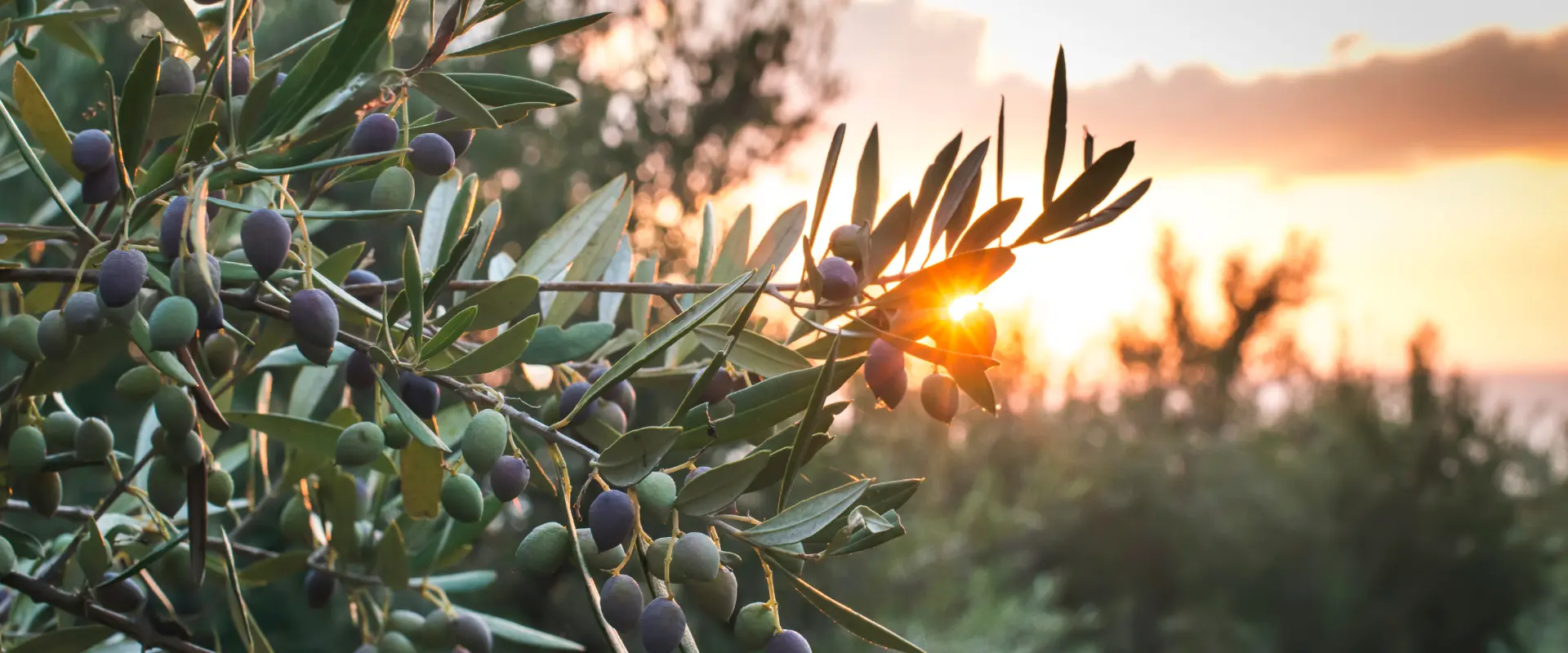

I used to think the Kingdom of God was like something out of a medieval fairy tale: turrets stretching skyward, covered in ivy, stone towers glistening in the evening sun.
Perhaps a little something like the Cair Paravel of Lewis’s imagination, with wide, rushing rivers curving around its feet and carpeted meadows stretching out behind it like skirts.
I imagined scenes of idyllic serenity – wild lions grazing alongside domestic animals, children playing over snake holes without fear, wolves and cattle side by side, their young playing together in wild abandon.
There would be tables spread with figs and pomegranates, honey, and great tankards of fresh milk, roasted lamb, wine, and warm, crusty bread. Goat’s cheese brought down from the highlands and big wheels of hard cheese from the lowlands. The scent of wildflowers and grass, and the tall spruce forests, perhaps the spicy freshness of ocean waves, would hang in the air.
And there would be laughter, goodwill – on earth as it is in heaven – spilling out of the towns and cities, filling the world with an invisible but tangible radiance.
As the sun began its slow descent in the evenings, dipping beneath the horizon, lights would twinkle on in all the homes and music and stories and laughter would continue into the night.
It’s a beautiful picture, a childlike vision of a world set right. Full of hope – and yet it always seemed so far away. The idea of the Kingdom always seemed “over there”, away beyond my reach, and further than any horizon I could ever travel to.
But as I grew older, I realised that Jesus had revealed something astonishing about the Kingdom. He had spoken of a different way of perceiving and receiving. He had spoken of its present reality, of its current proximity.
“The kingdom is right here,” he had said. “Among you. Within you.”
What had he meant?
What Is The Kingdom?
More than food-laden tables, glorious vistas, and peaceful homes, the Kingdom is firstly God’s space, the place He rules, where His will is done, and where mercy and justice live in perfect harmony.
It’s a place of goodness, and perhaps that’s why our imaginations turn instinctively towards all the good things; delicious food, late-night storytelling, and never-ending adventures in the glorious wildness of creation.
These evocative images speak to something deeper in our collective consciousness, a distant echo of a deeper truth about the way the world was meant to be. We picture, in truth, how the world looks when goodness spills over into every aspect of living and being human. What “very good” once looked like.
As Tolkien put it, “we all long for Eden, and we are constantly glimpsing it: our whole nature at its best and least corrupted, its gentlest and most humane, is still soaked with the sense of exile.”
And Jesus’ words bring that half-remembered picture into sharp and startling focus.
Now And Not Yet
If the Kingdom of God is here among us, within us, as Jesus said, then the Kingdom is not just the place where God will someday reign but also the place His reign is received now. Wherever there is goodness, mercy, justice, and truth, wherever the will of God is outworked in thousands of ordinary, sometimes unnoticed ways, the Kingdom of God has come. To step into the Kingdom, then, is not to escape the world, but to learn how to live differently within it.
On a still spring morning, over two thousand years ago, the King of that Kingdom stepped out of a dark tomb and into glory. He was life itself, and in rising he broke the power of death, not slowly or symbolically, but decisively, with a single, world-changing blow. His resurrection began the inexorable renewal of all things, of finally bringing heaven to earth.
What was once spoken of in promise and shadow was now set in motion. The future of God’s world broke into the present. Death no longer had the final word. The Kingdom was no longer only announced; it was finally inaugurated.
From that morning on, the Kingdom could not be undone, only resisted or received.
The Kingdom Was Jesus’ Favourite Story To Tell
Jesus told many stories about many different things. But none occupied his mind more than the Kingdom of God.
The Kingdom, he said, was like a tree, a mighty oak that had grown from a tiny seedling. Inconspicuous at first, easily overlooked, yet in time it grew so large that birds found shelter in its branches.
The Kingdom was like yeast worked into dough, unseen but unstoppable, transforming ordinary flour and water into bread, the stuff of life. Like alchemy, something was transmuting one thing into a new reality.
The kingdom was like treasure hidden in a field which a man, by chance, discovered. Once discovered, that treasure was worth selling everything else to obtain. Nothing compared. Nothing else even came close.
The kingdom was like a net cast wide and far into the sea, gathering fish of every kind. Universal, far-reaching, inclusive. Its reach would extend beyond the horizon, drawing many fish of every description into the boat.
The kingdom sounds like waves lapping against the side of a boat, like a shovel hitting dirt. It smells like soil and sweat and baking bread. It looks like calloused hands and worn sandals, like nets being mended and tables being shared.
It sounds like busy, bustling streets, the rustling of leaves in giant oaks, the clatter of dinner plates. But it also sounds like keyboards tapping in office buildings, kettles boiling in suburban kitchens, children calling from the next room, traffic moving through a city at dusk.
The Kingdom isn’t tied to the scenery of first-century Galilee or some future utopia that we only escape to after death. The Kingdom is God’s reign and rule, breaking into our ordinary, mundane, human lives, in every time and in every place, utterly transforming them into something good and glorious and eternal.
The Kingdom takes shape wherever the reign of Christ reaches into ordinary human life, wherever enemies are forgiven, strangers welcomed, burdens carried, truth spoken, bread shared, and people learn to live under the rule of a different King.
The Gospel Is The Good News Of God’s Kingdom
To understand the significance of the message of the Kingdom in the ministry of Jesus, we can turn to the New Testament. The term basileia (kingdom) occurs 162 times in the New Testament, and 121 of those appear in the Synoptic Gospels, where the preaching of Jesus is recorded. The specific phrases “the Kingdom of God” or “the Kingdom of heaven” occur 104 times in the Gospels alone.
It was the first thing that Jesus spoke about (Matthew 4:17, cf. Mark 1:15). And it was the last thing he spoke about after his resurrection, appearing to his disciples over forty days and speaking “about the kingdom of God” (Acts 1:3).
His ministry is bookended by the Kingdom of God, and it became the lens through which we see his miracles, his parables, his teaching on life and ethics, and, supremely, his own mission.
Jesus Is The Kingdom’s King
Jesus understood himself to be the fulfilment of the Old Testament prophecies, the longed-for saviour of Israel’s ancient stories (John 5:39, 46). But he was more than just a Jewish messianic figure. He also claimed to be the Life, the truth, the only way to the Father, offering something far deeper and greater than mere national revival and Israel’s restoration (John 14:6).
Yes, he was the king promised from David’s line, but he was born to rule over more than just a little patch of dirt stretched along the Mediterranean shoreline. Jesus was the rightful king of the world, the one to whom every knee will one day bow and every tongue confess “Jesus is Lord” (Phil 2:9-11).
Jesus came as the true king over and against the prince of this world, the one to whom men and women have been enslaved for centuries. He came preaching the Kingdom of God as the only rightful dominion and himself as the one who would inaugurate it, for the good of humanity and indeed the good of all creation (Mark 1:14-15). He came preaching a new day in an old story, the story of God’s reign come at last, in his own arrival.
My childhood imaginings about the Kingdom, while beautiful, were incomplete. Or perhaps a better word is disconnected. I saw all those things as belonging only to some future moment, a distant event still far off. But Scripture tells us otherwise. The Kingdom of God is part of the story that God has been telling us all along, from the first day in Eden until the final picture painted in Revelation.
And we discover that the Kingdom, which had been buried like treasure or planted like a seed, finally burst into full bloom at Jesus’ resurrection. Like leaven working through dough, a process had begun that could not be stopped. The King had been enthroned, death had been defeated, and a new creation had broken into the old.
The Kingdom was no longer merely something to wait for. It was already here, advancing steadily wherever Christ was acknowledged as Lord, even as the world still groaned for the day when his reign would be seen in all its fullness.
This is a Kingdom that is now and not yet. We catch glimpses of it around us. We taste it. We sense it in moments of goodness and beauty, in laughter and mercy, in the scent of birch-filled forests. We see it in lives being transformed by the grace of God, in forgiveness where bitterness once lived, in hope where despair had taken root, and in darkness being pushed back, bit by bit, by the light that gives life.
And yet it is not fully here, not fully arrived. “On earth as it is in heaven” is a work in progress, the slow, often painful, but ultimately faithful renewal of all things, as God brings His good world back to life.
On The Other Side Of The Glass
Perhaps, then, the child I was didn’t have it entirely wrong.
Maybe the mistake wasn’t in imagining rivers and forests, tables heavy with food, animals at peace, music drifting through open windows and lights glowing warmly as evening settled over the earth. Maybe the mistake was thinking all of it belonged somewhere else. Somewhere beyond the horizon. Somewhere I would only reach one day.
Because perhaps those childhood imaginings were glimpses of something true after all. Echoes of a world being made whole, of creation at peace beneath its King, all of it happening right now on the other side of the glass.
And while we don’t yet live in that world in all its fullness, neither are we strangers to it. Every now and then, the horizon feels a little closer.
In bread shared around a table. In laughter carrying late into the evening. In mercy offered where none was deserved. In the quiet restoration of something once broken. In forests filled with light and the scent of earth after rain.
Small glimpses, perhaps. But glimpses nonetheless.
The Kingdom was never only over there. It has been coming towards us all along.