
In short: People keep telling us abortion is healthcare, but calling it ‘healthcare’ doesn’t change what it does. This article looks at how language is being used to hide the unborn child, where Australia’s abortion laws now stand, and the hard questions people ask, with firm answers and real grace for anyone carrying the weight of a past abortion.
Contents
Things are, quite frankly and between you and me, out of control.
Words no longer mean what they used to. Rights and freedoms we once took for granted are being increasingly reinterpreted, while the very concepts of truth, identity, and morality seem to be up for negotiation. We’re told that our society is progressing. But you look around and have to wonder whether this is really true and if we’re all living in the same reality.
What Even Is A Woman Anymore?
The recent ruling against Sall Grover in Tickle v. Giggle showed that the identity of ‘woman’ is now totally up for grabs. Not only are women’s legal protections being reinterpreted for the benefit of men, but the very definition of womanhood itself is now contested. When men can claim the same legal protections meant for women, on the basis of gender identity, irrespective of biological sex, it begs the question: what even is a woman anymore?
The Sex Discrimination Act was intended to protect women, yet in practice, it’s actually leaving them high and dry. In Sall Grover’s case, that has meant losing in court, and then losing again when the High Court refused to even hear her appeal in September. That’s the end of the legal road, and all she has to show for it is mounting legal debts. Giggle itself, the women-only app that started it all, has long since shut down.
Free Speech (Terms And Conditions Apply)
And freedom of speech? Well, apparently you can talk about whatever you like – as long as it’s on the approved topics list. But comment too many times on unapproved (read: controversial) topics, and you might find yourself temporarily banned from the conversation altogether. It happened to someone I know recently: they commented too many times on a particular topic, and Facebook restricted their account for two weeks. A ‘cooling-off period’, apparently. Nothing says freedom of expression quite like being sent to the digital naughty corner for voicing what has been decided is an unpopular opinion.
But the thing is, those ‘unpopular opinions’ used to be the stock-standard views of the average Australian. Not weird, not controversial, not even up for debate. Everyone knew what a woman was (an adult biological female), and nobody imagined we’d one day be debating whether men could breastfeed.
Biological sex wasn’t assigned at birth. You were either a boy or a girl*, and it was clearly obvious to everyone. Not believing that there are dozens of genders didn’t make you phobic, violent or deserving of cultural cancellation. It just made you normal.
Disagreement wasn’t hate; it was, well, simply disagreement. And everyone knew that tolerance didn’t mean having to buy into someone else’s reality. It just meant being civil with people you didn’t agree with.
The Language War Comes For The Unborn
Language has become the battleground. Words that once conveyed something clear have been redefined, repackaged, and repeated and now, even questioning their (repurposed) meaning has almost become more controversial than the claims themselves. You’re supposed to show that you’re progressive, thoughtful, affirming by agreeing, without question, that a man can become a woman if he wants to, that men who lactate should have the same protections under law as women (men who lactate??), and that there’s no such thing as pregnant women; rather, there’s persons who are pregnant or birthing parents.
For goodness sake. If this only existed in the weird outer regions where the flat-earthers and those who think birds are government drones get together, we’d all laugh, roll our eyes, and move along. But this is in the mainstream, normative discourse. This is being parroted from podiums by our politicians. This is being written into health guides and underscored by legislation. And we’re the ones being told we’ve lost the plot.
But perhaps none are greater victims of this ridiculous reinterpretation of reality than the most vulnerable and precious members of the human family: babies. Offered up on the altars of self-interest and disregard, the unborn are now being relabelled as ‘pregnancy tissue’, ‘a clump of cells’, ‘products of conception’ or even ‘parasites’, their human identity reduced to something that can be terminated on a whim. And all of this is sanctioned and legalised under the banner of yet another language switchup: that ‘abortion is healthcare’.
‘Abortion Is Healthcare’ Is Now An Election Promise
In fact, the abortion is healthcare mantra has become something of a political watershed of our time. In Victoria, the Labor Party recently pledged $30 million over four years to make abortions free if re-elected, a promise quickly matched by the Liberal and National Coalition. What was once a deeply contentious moral question – because the termination of human life was at the heart of the conversation – has simply become an election promise, with both major parties competing to fund it.
And if you think free abortion is the outer edge of this conversation, think again. Across most of Australia, abortion is available on request up to somewhere between 22 and 24 weeks, depending on the state (16 in Tasmania, and no limit at all in the ACT). After that, it’s still legal, right up until birth, as long as two doctors sign off. (South Australia also asks for a serious medical reason, which is why its Parliament keeps revisiting the issue.)
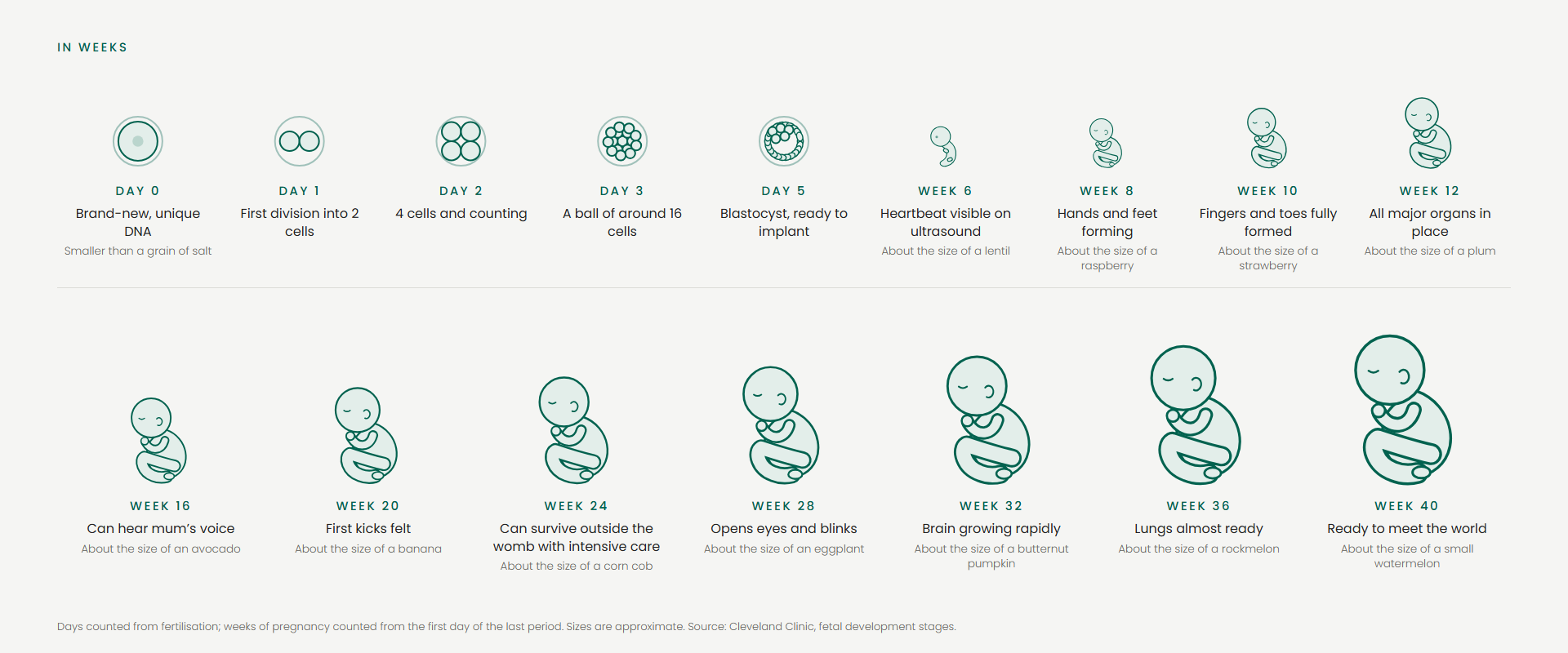
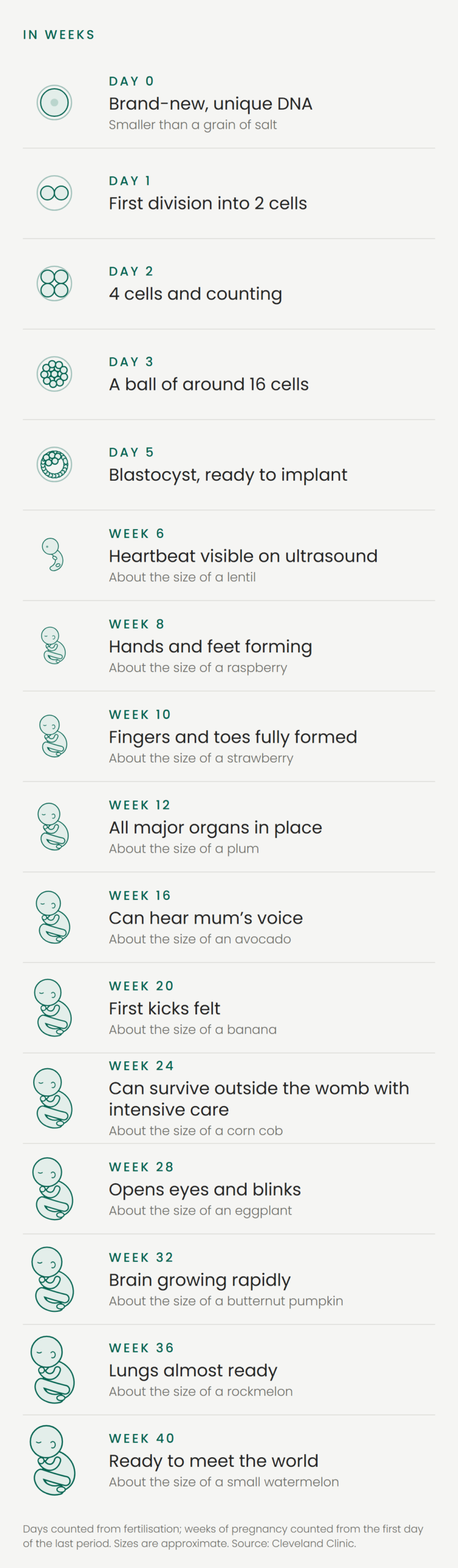
At 22 weeks, a baby is starting to hear mum’s voice, kick hard enough to keep her up at night, and is being saved in neonatal units around the country by doctors working very hard to do exactly that. Same baby, same age. One down the corridor is a patient; the other is a procedure.
This year, South Australia had a chance to draw a line. Family First’s Sarah Game brought a bill to restrict abortions from 24 weeks and six days, with exemptions when the mother’s life is in danger or the baby has significant abnormalities. It scraped through the upper house 10 votes to 9, then the lower house knocked it back 36 to 9 in June. (For the record, the Premier and the Opposition Leader both voted for it. It still didn’t get close.) Two years earlier, Ben Hood’s bill failed by a single vote. It wouldn’t even have stopped the pregnancy ending. It simply asked that babies after 28 weeks be delivered alive and offered for adoption.
Let that sink in. Parliament wasn’t being asked to ban abortion. It was being asked whether a baby old enough to survive outside the womb could be born alive instead. And the answer was no.
Meanwhile in Queensland, the Premier has banned MPs from touching the abortion law at all this term. And in NSW, a bill simply to stop abortions chosen because of the baby’s sex was voted down 21 to 16. (Australian researchers have found more boys being born than nature would produce in some communities, which they describe as indirect evidence of sex-selective abortion. So much for women’s rights).
Healthcare Is Meant To Heal
Let me say it plainly. Abortion is not healthcare.
Healthcare is meant to heal. That’s sort of the whole point. Doctors have been swearing some version of “first, do no harm” for a couple of thousand years, and I’m pretty sure no one’s been saying it with a little asterisk in mind for the smallest patient in the room.
Now, before anyone fires up the keyboard: yes, I know pregnancy doesn’t always go to plan. An ectopic pregnancy can never end with a living baby, and if it’s left without medical intervention, it will often kill the mother. And there are heartbreaking situations where a baby has to be delivered early to save mum’s life, even though that little one is too young to survive. Those families need every bit of care, compassion, and medical skill available to them. Nobody is suggesting that life-saving treatments should be withheld from pregnant women.
But trying to save a life and losing one along the way is not the same as setting out to end one. In the first case, death is the tragedy nobody wanted. In the second, it’s the plan. Slapping the word “healthcare” over both doesn’t make them the same thing. It just makes the difference harder to see, which, I suspect, is actually the point.
Someone Has Gone Missing
And somewhere in all this careful rewording, someone goes missing. The baby. Because we’re being told it was never a baby to begin with.
I see it all the time on Facebook and Instagram: ask the average person what a foetus actually is, and most can’t really tell you. And to be honest, it’s not really their fault. They’ve been hearing slogans instead of science for a long time now. In fact, a guy I watched online this morning described the developing foetus as “”a clump of cells’ that at some point turns into a recognisable organism.” All they know for sure is that it’s not a baby. Not the same kind of baby you see in a crib in a maternity ward.
They’re often shocked to see ultrasound images of a twelve-week pregnancy and discover that what they’d been told was “just tissue” has a face, a heartbeat, and ten tiny fingers.
Foetus and embryo are just words for stages of human life, like toddler or teenager. In fact foetus comes from the Latin fetus, which simply means ‘offspring’, so even the clinical word gives the game away. But ‘products of conception’, ‘pregnancy tissue’, ‘a clump of cells’? Those aren’t descriptions; they’re disguises, designed to make a living human being easier to dismiss.
Biology settled who this is a long time ago. So if that small human doesn’t get the same right to life as the rest of us, I’d genuinely love someone to explain why not, where exactly the line sits, and who gets to draw it.
There are the hard cases: rape, incest, abuse. They’re horrible, full stop, and any woman who has lived through them deserves compassion, not a lecture. But how a child was conceived doesn’t change who that child is. If a man with children commits rape, nobody suggests we punish his kids for it. We all understand that children don’t carry their father’s crimes.
So why should the unborn child carry them?
Yeetus That Fetus
And then there’s the flippancy of it all. Recently, a woman online told me that if she ever found herself pregnant, she’d “yeetus that fetus”.
Yeetus. That. Fetus. Catchy, I’ll give her that.
I’ll be honest: my first reaction was to hope she’d never become a mother because, well, what kind of woman can have that kind of cold disregard for her very own offspring? It’s more than heartbreaking. It’s chilling. And yet we hear it all the time, double-blink, call it bodily autonomy and move on. Women’s rights and all that, but of course who’s to say what a woman is these days, anyway.
Or the video that went viral after the US midterm elections this month: a group of young women cheering, “Abortion is so back, baby!” Baby. Of all the words to choose. And am I supposed to be applauding this as some kind of progress for women, women’s healthcare, and the human race in general?
Then there’s the accusations that come if one does feel morally obliged to speak up in defence of the unborn. Do I feed starving children in Africa? No? Well then, apparently I don’t really care about children, only about repressing women’s rights, and so I should sit down and shut my mouth.
Call me old-fashioned, conservative, pro-life (a dirty word these days, it seems) if you like, but I’m not buying the abortion is healthcare mantra, and neither should you. Around 73 million unborn babies lose their lives to abortion worldwide every year, and many women carry the grief and regret for years afterwards, often silently, because they’ve been told there’s nothing to grieve.
There’s nothing healthy or caring about it.
Is This A Hill To Die On?
I’ve deliberately tried, in recent years, to approach topics less dogmatically than I might once have. I’ve learned that not everything is black and white, that humans are complicated, and that sometimes we simply don’t have all the answers. In matters of faith, there are plenty of secondary issues we can feel strongly about and still agree to disagree on.
But this is not one of those issues. This is a hill I’m willing to die on.
This isn’t something we, as Australians, can overlook or pretend doesn’t matter. Our politicians, our health officials and the loudest voices in public discourse keep telling us that the baby at the centre of it all isn’t really a baby, and that ending its life is nothing more than healthcare. That is a lie.
There is nothing healthy, just, or moral about deliberately ending a baby’s life, whether inside the womb or out, and our silence or complacency on it isn’t neutral. Either we believe every human being has the right to life, at every stage and in every circumstance, or we don’t. And if we don’t, then on what basis does our society keep operating at all? All we’re really left with is the law of the jungle: survival of the fittest, and may the strongest wo(man) win.
The Hard Questions (And Some Honest Answers)
If you’re not sure what to think, that’s okay. There’s enough noise out there to drive anyone mad, and some of it, I suspect, is meant to keep us confused. So let’s slow down and work through the questions people actually ask, one at a time.
When Does Life Actually Begin?
This one’s less tricky than people make out. From the moment of conception, there’s a new, living human being with their own DNA. It isn’t mum’s and it isn’t dad’s. It’s growing, and if left alone, it will keep growing. This stage of development is simply the first of many that this unique human person will go through in their life. That isn’t a religious claim. It’s the first chapter of any embryology textbook. The Bible simply adds the bit science can’t. “You knit me together in my mother’s womb,” says the psalmist (Psalm 139:13). God was at work long before anyone saw a heartbeat on a screen.
Does Being Small Make Someone Less Human?
The unborn child is smaller, less developed, in a different place, and more dependent than you or me. But so is a newborn. So is a toddler, for that matter (ask any mum how independent a two-year-old really is). We don’t measure a person’s worth by their size or abilities, or by how much they need us. If we did, we’d all be in trouble at the start of life and again at the end. Every person carries the image of God (Genesis 1:27), and that doesn’t kick in at 12 weeks, 16 weeks, 24 weeks, or only just after birth.
But Isn’t It My Body, My Choice?
It’s your body, absolutely, and pregnancy asks an enormous amount of it. Nobody who has carried a child would pretend otherwise. But a pregnancy involves two bodies, not one. The baby has their own heart, their own blood type, and often a different sex from their mother.
Bodily autonomy matters, but it has never meant the right to end someone else’s life. That’s true for every one of us, and it’s true for the smallest of us too.
What If The Mother’s Life Is In Danger?
In those rare and awful cases, doctors should do everything they can to save the mother, and the Christian position has never been otherwise. Treating an ectopic pregnancy or delivering a baby early to save mum isn’t the same as an abortion, as we touched on earlier. The aim is to save life, and if the baby can’t be saved, that’s a grief to be carried, not a choice to be celebrated. These cases are real, but they aren’t what the “abortion is healthcare” campaign is mostly about, and we shouldn’t let them be used as cover for everything else.
Doesn’t The Bible Approve Of Abortion In Exodus 21?
This one does the rounds online with great confidence, usually from people who haven’t read the passage. Exodus 21:22–25 describes two men fighting who accidentally hit a pregnant woman. If she “gives birth prematurely but there is no serious injury”, the man pays a fine. If there is serious injury, the penalty is “life for life”.
Some older translations said “miscarriage”, and that’s where the argument comes from: the baby’s death only earns a fine, so the baby must count for less. But the Hebrew word used is the ordinary word for a child, and the verb is the same one used for a normal, live birth. Most modern translations read it as the baby being born early. If either mum or baby is seriously hurt, the punishment is the same. If anything, the passage gives the unborn child the same protection as everyone else.
And even if you take the “miscarriage” reading, it’s about an accident, and it still demands a penalty. A law punishing someone for accidentally harming an unborn child is a strange place to look for permission to end one’s life on purpose.
What About Rape?
This is the hardest one, and it deserves gentleness more than a clever answer. A woman who has been raped has had something stolen from her, and she needs protection, justice, care, and time. Rape is a crime, and the man responsible should face the full weight of the law. What she doesn’t need, however, is a second act of violence, even one dressed up as a solution. The child isn’t the crime, and some women who have walked this road say that their child was the good thing that came out of the worst thing.
If you’re a Christian, the question isn’t only “what should she do?” It’s “what are we going to do to carry her through this?”
What If The Baby Has A Serious Diagnosis?
Few things will flatten a parent like hearing “incompatible with life” or “significant disability” at a scan. The pressure to terminate can be enormous and very quick. But a child’s worth has never depended on how long they’ll live or how well they’ll function. In fact, none of us are guaranteed a life without trouble, illness, disability, or lack. Some families who chose to carry their baby to term, even for a few precious hours, say they wouldn’t trade that time for anything. Perinatal hospice and support exist for exactly this situation, and no family should have to walk it alone.
But I Can’t Afford A Baby. I’m Not Ready.
That fear is real, and I won’t wave it away with a Bible verse and an empty platitude. Babies are expensive, timing is often terrible, and some women are frightened, alone or under pressure from a partner who has already said he’s out. Here’s where the church has to put its money where its mouth is: meals, nappies, a spare room, a babysitter, a friend at the appointments. If we’re going to say “don’t”, then we’d better be ready to say “and we’ll help”.
Adoption is a real and loving option too. It’s far less common in Australia than it once was, but there are couples longing to raise a child, and choosing it is an act of courage, not abandonment.
If You’re Pro-Life, Why Aren’t You Fixing Every Other Problem?
The “do you feed starving children in Africa?” question. Fair enough, Christians should care about children after they’re born, and the reality is that plenty of us do. The church has a long history of orphanages, hospitals, foster care, and adoption (James 1:27 doesn’t leave us much wiggle room). But you don’t have to solve world hunger to say that ending a child’s life is wrong. Nobody tells an anti-domestic-violence campaigner to sit down because they haven’t also fixed homelessness.
I’ve Had An Abortion. Is There Any Hope For Me?
Yes. Oh, friend, yes.
If you’re reading this with a knot in your stomach, please hear me: nothing in this article is meant to crush you. Many women were told it was “just tissue”, or were pressured, frightened, or alone, and some have carried that grief and shame silently for years. Jesus doesn’t stand at a distance with a clipboard. He went to the cross for exactly this kind of weight. “If we confess our sins, he is faithful and just and will forgive us” (1 John 1:9), and “there is now no condemnation for those who are in Christ Jesus” (Romans 8:1).
Your story isn’t over, and it isn’t beyond his reach. There’s grace here, and there are people who would willingly walk with you through it.
What Can I Actually Do?
Pray, first and always. Speak up, kindly and clearly, “for those who cannot speak for themselves” (Proverbs 31:8). Vote with your conscience, even when both major parties are lining up to fund the same thing. Give to and volunteer with pregnancy support services. And be the kind of person a frightened young woman would feel safe telling, because if she’s scared of your judgement, she’ll never hear your help.
In Conclusion
If you take just one thing away from this article, whatever your circumstances, I hope it’s a new or renewed conviction that every human life is precious, no matter its location, its stage of development, its usefulness, or even how it was conceived.
The world has long agreed that humans have certain inalienable rights, and the most basic of them is “the right to life, liberty and security of person” (Article 3, Universal Declaration of Human Rights). Those rights belong to every human being, not just some. Even the UN’s own Convention on the Rights of the Child recognises that a child needs “appropriate legal protection, before as well as after birth”.
The truth is, abortion isn’t healthcare. It’s a human rights travesty, and it’s time we called it what it is.
* Intersex conditions, sometimes called differences of sex development, are real, and they’re rare. They’re medical conditions that affect how a baby’s body develops, not evidence of a third sex or a spectrum of genders. Every person with an intersex condition is made in God’s image and deserves dignity and care. I’ve written about this in more depth in Sex + Gender.
Disclaimer: This article was developed with the assistance of AI tools for research and drafting support. All arguments, conclusions, and final wording have been written, reviewed, and approved by the author.